
Citizenship, Electoral Rolls and the Growing Global Crisis of Belonging
India's ongoing Special Intensive Revision (SIR) of electoral rolls has renewed debate over voter registration, citizenship documentation and the rights of people whose names are missing from electoral lists. The issue also connects with a wider global challenge involving refugees, internally displaced people and stateless populations who face uncertainty over legal status and belonging.
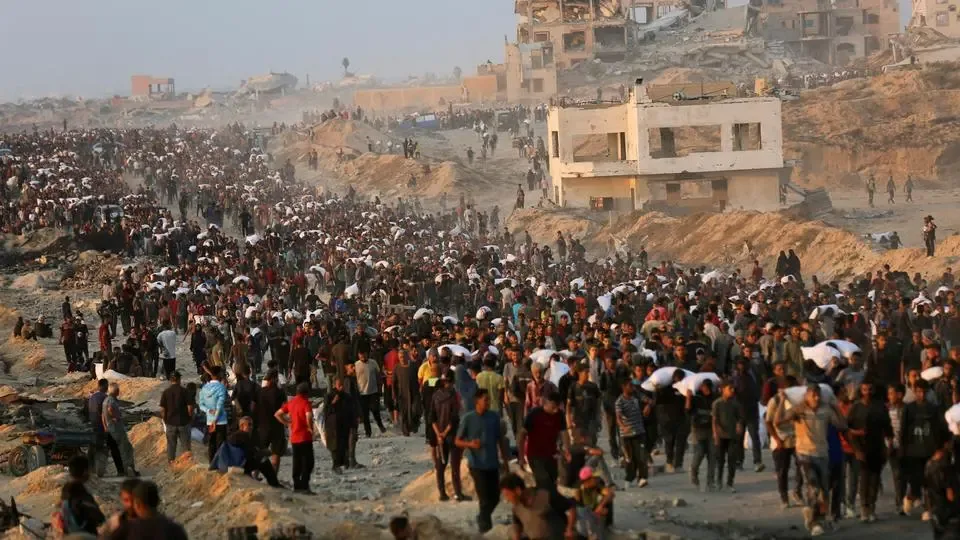
India's ongoing Special Intensive Revision (SIR) of electoral rolls has brought questions surrounding voter registration, documentation and citizenship into renewed public debate.
The discussion is also part of a wider global issue. Across different regions, millions of refugees, internally displaced people and stateless persons face uncertainty over their legal status and connection with a country.
At the centre of the debate is a fundamental question: what happens when a person's legal connection with a state becomes uncertain?
India's SIR and the Citizenship Debate
The Special Intensive Revision (SIR) is an Election Commission exercise aimed at revising and verifying electoral rolls.
The process has attracted political controversy, particularly over the number of names removed or not included in electoral rolls and the documents required to establish eligibility.
Opposition parties and other critics have raised concerns about the possible exclusion of eligible voters, while the Election Commission has maintained that the revision is intended to ensure that eligible citizens are included and ineligible persons are excluded from electoral rolls.
It is important to make a clear distinction between electoral registration and citizenship.
A person's name being removed or not appearing on an electoral roll does not, by itself, establish that the person has lost Indian citizenship. Electoral registration determines eligibility to vote, while citizenship is governed by separate constitutional and legal provisions.
Why Documentation Matters
Modern states rely heavily on official documents and databases to establish identity, residence, nationality and eligibility.
For many citizens, these systems function as routine administrative mechanisms. But for migrants, displaced families, people with incomplete records and those whose documents contain inconsistencies, proving identity can become significantly more difficult.
A missing birth certificate, an old address, differences in names across documents or the absence of historical records can create additional administrative challenges.
This is why large-scale verification exercises can have consequences beyond the immediate question of voter registration.
The Global Crisis of Displacement
The issue is not limited to India.
According to the United Nations High Commissioner for Refugees (UNHCR), tens of millions of people around the world are refugees or internally displaced because of conflict and violence.
At the end of 2025, UNHCR reported 41.6 million refugees, 9 million asylum-seekers and 68.7 million internally displaced people affected by conflict or violence.
UNHCR also reported at least 4.5 million stateless people — people who are not recognised as citizens by any country.
Statelessness can prevent people from accessing basic rights and services, including education, healthcare, employment and freedom of movement.
— UNHCR
These figures illustrate the scale of a global problem in which millions of people live without the same degree of legal security enjoyed by citizens of recognised states.
Citizenship, Statelessness and Belonging
Citizenship is more than an identity document. It represents a legal relationship between an individual and a state.
It can determine access to political participation, passports, public services and legal protection.
When a person becomes stateless or faces uncertainty over nationality, ordinary aspects of life can become more difficult. Travelling, studying, obtaining formal employment or accessing government services may require additional documentation or legal procedures.
For refugees and displaced people, the situation can become even more complicated because displacement may separate them from the documents and institutions that previously established their identity.
A History of Exclusion
The history of the 20th century contains several examples in which nationality and legal status became instruments of exclusion.
In Nazi Germany, laws stripped German Jews of citizenship and civil rights before the Holocaust reached its most devastating stage.
The Nakba of 1948, during the war surrounding the creation of Israel, resulted in the mass displacement of Palestinians and created continuing disputes over Palestinian statehood, nationality and the right of return.
These historical events occurred in different political and legal circumstances and should not be treated as identical to contemporary electoral-roll exercises.
However, they demonstrate why questions surrounding citizenship and legal belonging can have profound consequences for individuals and communities.
The 21st Century and New Forms of Uncertainty
The 21st century has witnessed large-scale migration and displacement caused by wars, political instability, economic pressures and other factors.
Governments have responded with stronger border controls, identity verification systems and changes to citizenship and asylum policies.
Supporters of stronger verification systems generally argue that states need accurate records, secure borders and reliable electoral databases.
Critics, however, warn that complicated documentation requirements can disproportionately affect people who are poor, displaced, elderly, migrants or otherwise unable to produce historical records.
The central challenge is therefore to maintain accurate public records while ensuring that legitimate claims are not lost because of administrative barriers.
Electoral Integrity and Individual Rights
An accurate electoral roll is fundamental to the functioning of a democratic system.
At the same time, the process of creating and updating electoral rolls requires transparent procedures through which people can check their records, submit claims and seek corrections.
The balance between these objectives becomes especially important during large-scale revisions.
The debate around India's SIR therefore extends beyond political parties. It raises broader questions about documentation, administrative transparency and the ability of citizens to establish their eligibility.
A World Searching for Belonging
Across continents, millions of people live between different legal categories — citizens, refugees, asylum-seekers, migrants, internally displaced people and stateless persons.
For some, the uncertainty may last for months. For others, it can continue for generations.
The challenge for modern states is not simply to determine who qualifies for citizenship or voting rights. It is also to ensure that people have a fair and accessible process through which their identity and legal status can be established.
The Larger Question
The debate over electoral rolls in India and the global crisis of displacement point towards a common question:
How should modern states protect the integrity of national systems without leaving legitimate individuals without a secure legal identity?
The answer will depend on the laws of individual countries, the safeguards built into administrative processes and the ability of affected people to challenge decisions.
As migration and displacement continue to reshape societies, the question of who belongs — and how that belonging is legally recognised — is likely to remain an important issue for governments and communities around the world.
Key Facts
- India: The Election Commission is conducting a Special Intensive Revision of electoral rolls.
- SIR: The process concerns the revision and verification of electoral rolls and should not automatically be equated with cancellation of citizenship.
- Global refugees: UNHCR reported 41.6 million refugees at the end of 2025.
- Internally displaced people: UNHCR reported 68.7 million people internally displaced because of conflict or violence at the end of 2025.
- Stateless population: UNHCR reported at least 4.5 million stateless people at the end of 2025.
- Central issue: Electoral integrity, citizenship documentation and individual rights increasingly intersect in debates over national belonging.
Frequently asked questions
What is India's Special Intensive Revision (SIR)?
SIR is an Election Commission exercise for revising and verifying electoral rolls under the applicable electoral laws and rules. The current 2026 exercise is being conducted according to state- and UT-specific schedules.
Does removal from an electoral roll mean loss of citizenship?
No. Electoral-roll eligibility and citizenship are separate legal questions. A person's absence from an electoral roll does not by itself establish that the person has lost citizenship.
How many refugees were there worldwide at the end of 2025?
UNHCR reported 41.6 million refugees worldwide at the end of 2025.
How many stateless people are there worldwide?
UNHCR's statistical reporting counted at least 4.5 million stateless people at the end of December 2025, while noting that the actual number is likely substantially higher.
What is the difference between a refugee and a stateless person?
A refugee is generally a person who has fled their country and meets the applicable criteria for international protection. A stateless person is someone who is not recognised as a citizen by any country. A person can belong to both categories.
Where can voters check their electoral-roll information?
The Election Commission of India provides voter-registration and electoral-roll services through its official voter-services platform, including facilities to search electoral rolls and track applications.
Sources
- Election Commission of India — SIR 2026 and Electoral Roll Services
- Election Commission of India — SIR 2026 Citizen Service Portal
- Election Commission of India — Special Intensive Revision Order
- Election Commission of India — Electors and Voter Services
- UNHCR — Global Trends 2025
- UNHCR — Figures at a Glance
- UNHCR — Stateless People
Spotted a mistake? See our corrections policy or write to grievance@mishraworld.com.